Glaucoma can damage the optic nerve without early symptoms. In selected narrow-angle conditions, a laser peripheral iridotomy may improve drainage by creating an opening in the iris.
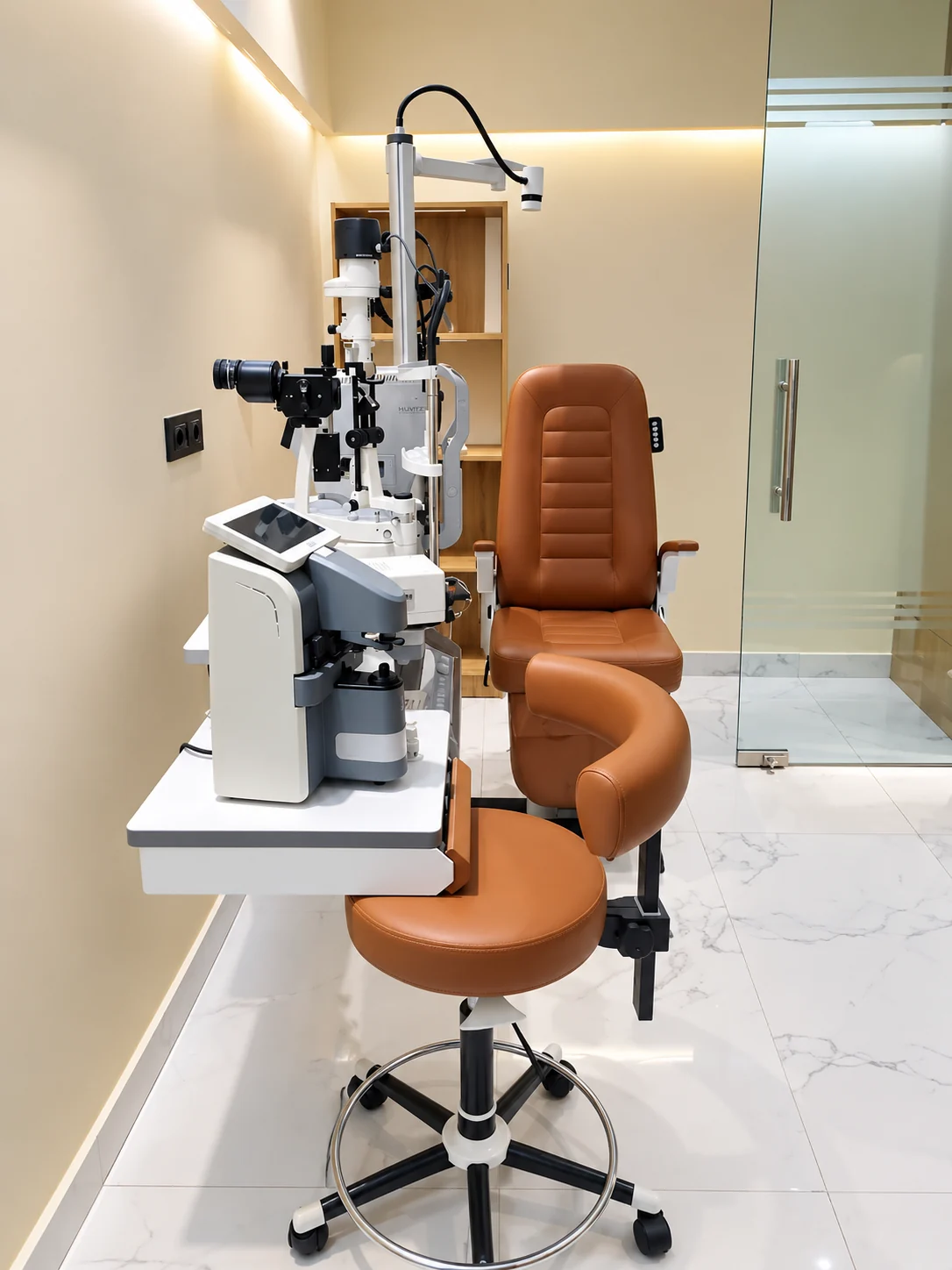
Educational artwork under clinical review: The diagrams simplify anatomy. A peripheral iridotomy is not risk-free, does not guarantee improved vision, and is suitable only after individual assessment. The pictured equipment and laser treatment are not confirmation of availability at this clinic.
Eye care / Visual education
Glaucoma and Nd:YAG iridotomy consultations
01 / 04Glaucoma risk and narrow drainage angles
01 / 04
Glaucoma risk and narrow drainage angles
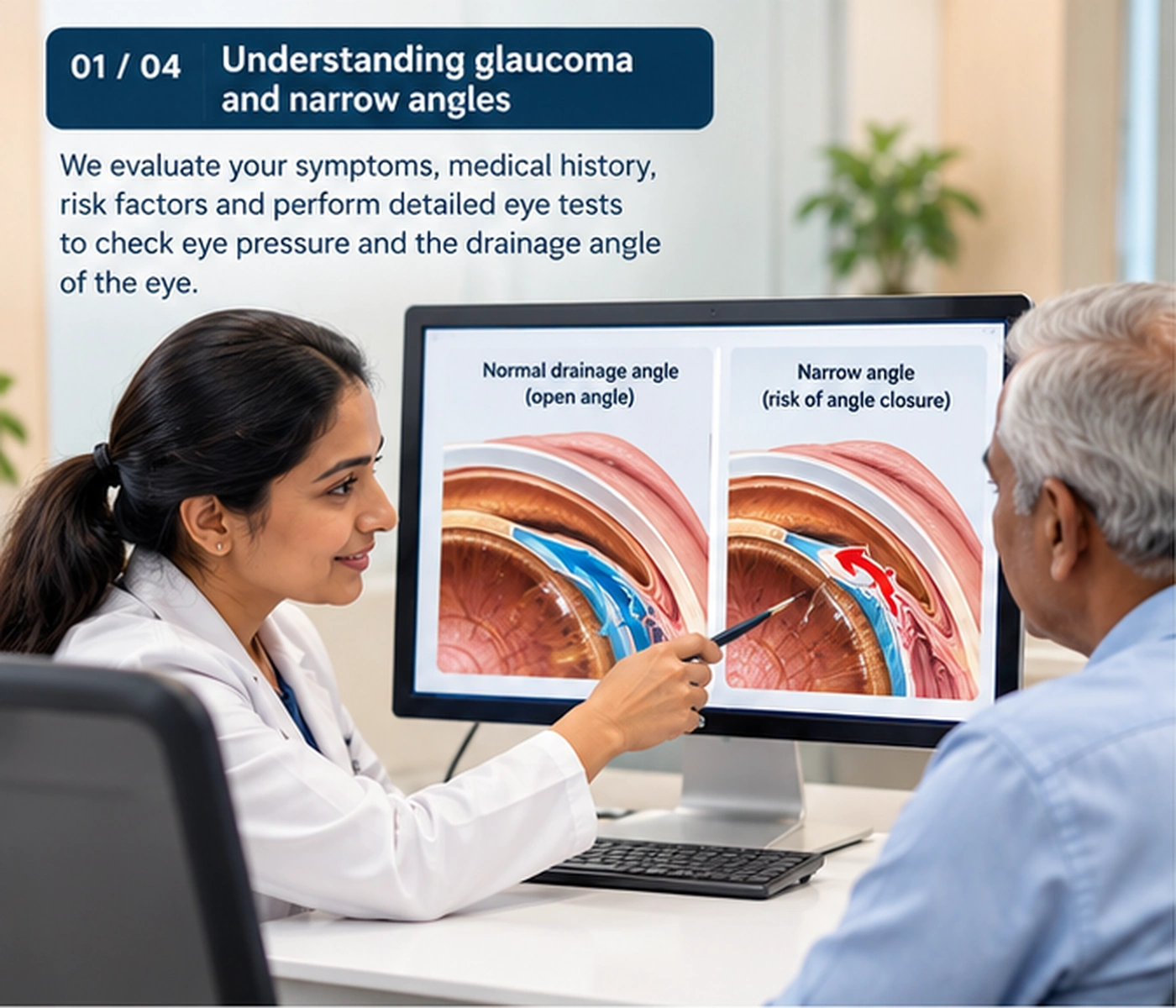
Glaucoma can damage the optic nerve, often without early symptoms. A narrow drainage angle can sometimes close and raise eye pressure, but narrow angles and glaucoma are not interchangeable diagnoses. The ophthalmologist assesses individual risks and symptoms.
02 / 04
Eye pressure, optic nerve and angle assessment
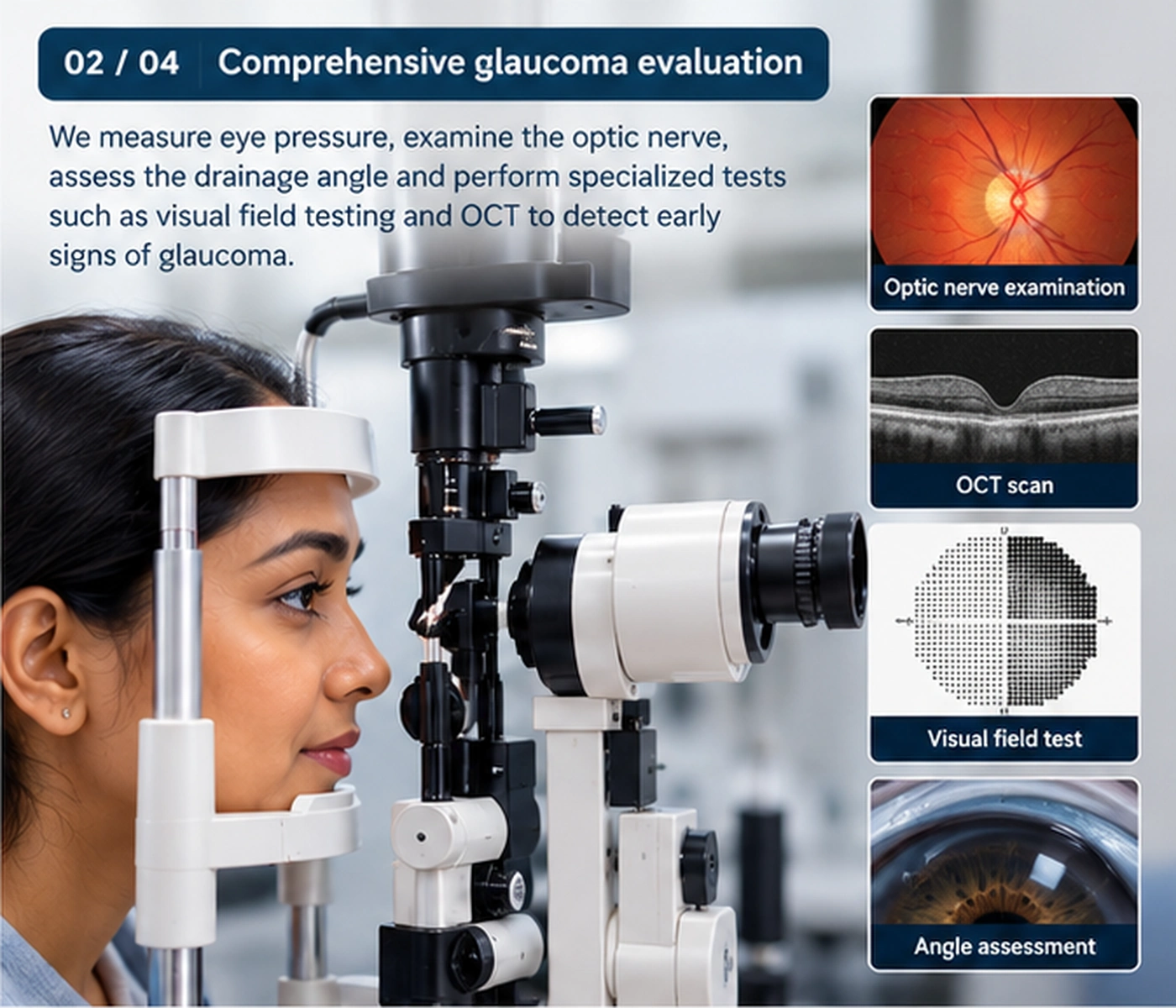
An examination may include measuring intraocular pressure, checking the drainage angle with gonioscopy, evaluating the optic nerve and requesting visual-field testing or OCT if indicated. Not every test is needed for everyone, and pictured equipment availability is not established.
03 / 04
When peripheral laser iridotomy may be considered
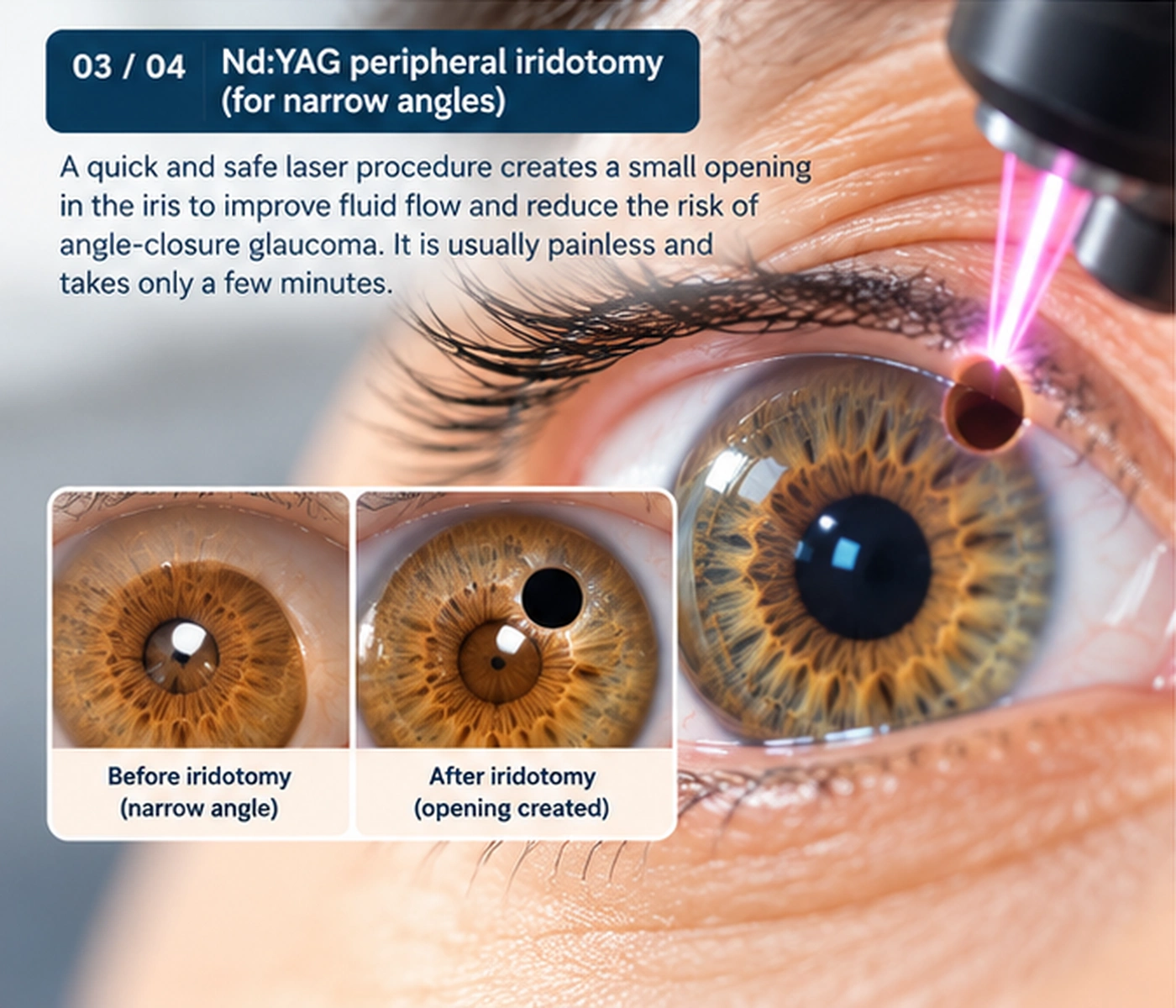
For selected angle-closure mechanisms, Nd:YAG peripheral iridotomy creates a small opening near the outer iris to help equalise pressure across it and improve the angle configuration. It is not a cure for all glaucoma and is not universally appropriate. Risks, alternatives and the treatment venue require a clinician's explanation.
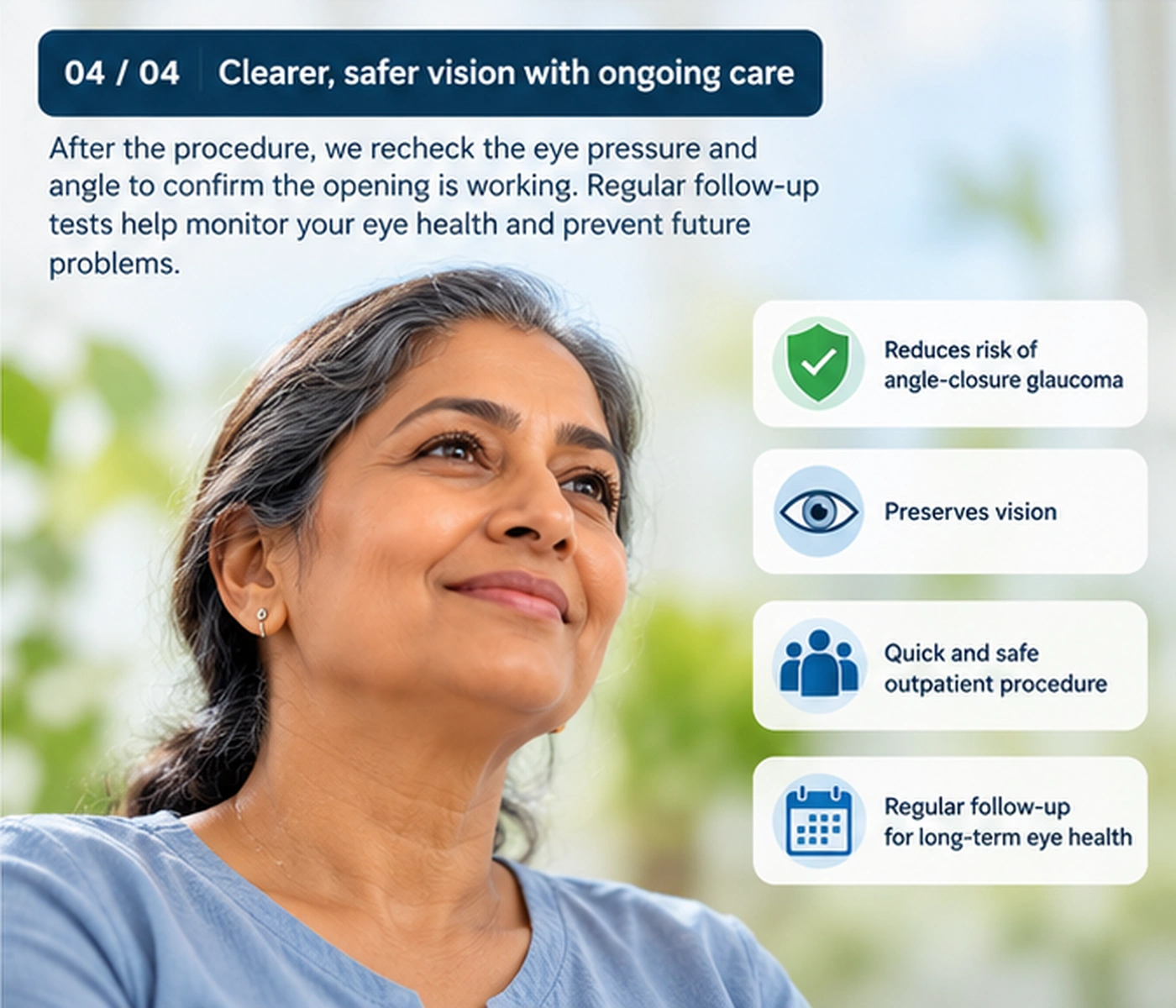
04 / 04
Interpreting findings and planning follow-up
The clinician reviews any results and decides whether monitoring, eye drops, an appropriate procedure or referral is needed. Pressure and angle checks may be recommended after iridotomy, and glaucoma requires ongoing assessment. Improvement in vision is not guaranteed.
AI-generated educational illustrations, not patient photographs or recordings of actual procedures. Individual treatment and outcomes vary.
01 / Understanding symptoms
When to ask for an assessment
High eye pressure or glaucoma risk
Optic nerve or visual field concern
A narrow drainage angle seen on examination
02 / Discussion topics
Tests and treatments to discuss
Your clinician will explain which approaches may be relevant. Procedure equipment, location, accreditation and availability must be independently confirmed.
Glaucoma screening
Medical glaucoma management
Glaucoma monitoring
Angle closure evaluation
Nd:YAG laser peripheral iridotomy
Nd:YAG peripheral iridotomy
For selected narrow-angle conditions, an ophthalmologist may consider laser peripheral iridotomy. It requires a suitability examination; the procedure location and equipment are not confirmed by this page.
The ophthalmologist assesses pressure, optic-nerve health and the anterior chamber angle before discussing medication, monitoring and Nd:YAG laser peripheral iridotomy when indicated.
04 / Informed decision
Suitability, alternatives and safety
Not every narrow angle needs preventative laser. Sudden painful red eye, vomiting or rapid visual loss may signal an emergency.
A consultation is not a laser or operating-room booking. Any surgical arrangements and venue are confirmed separately.
Clinician
Dr. K. Meghana Reddy
MBBS, MS (Ophthalmology), FAIS. Further investigations or specialist involvement depend on your assessment.