Understanding your child's vision and eye alignment
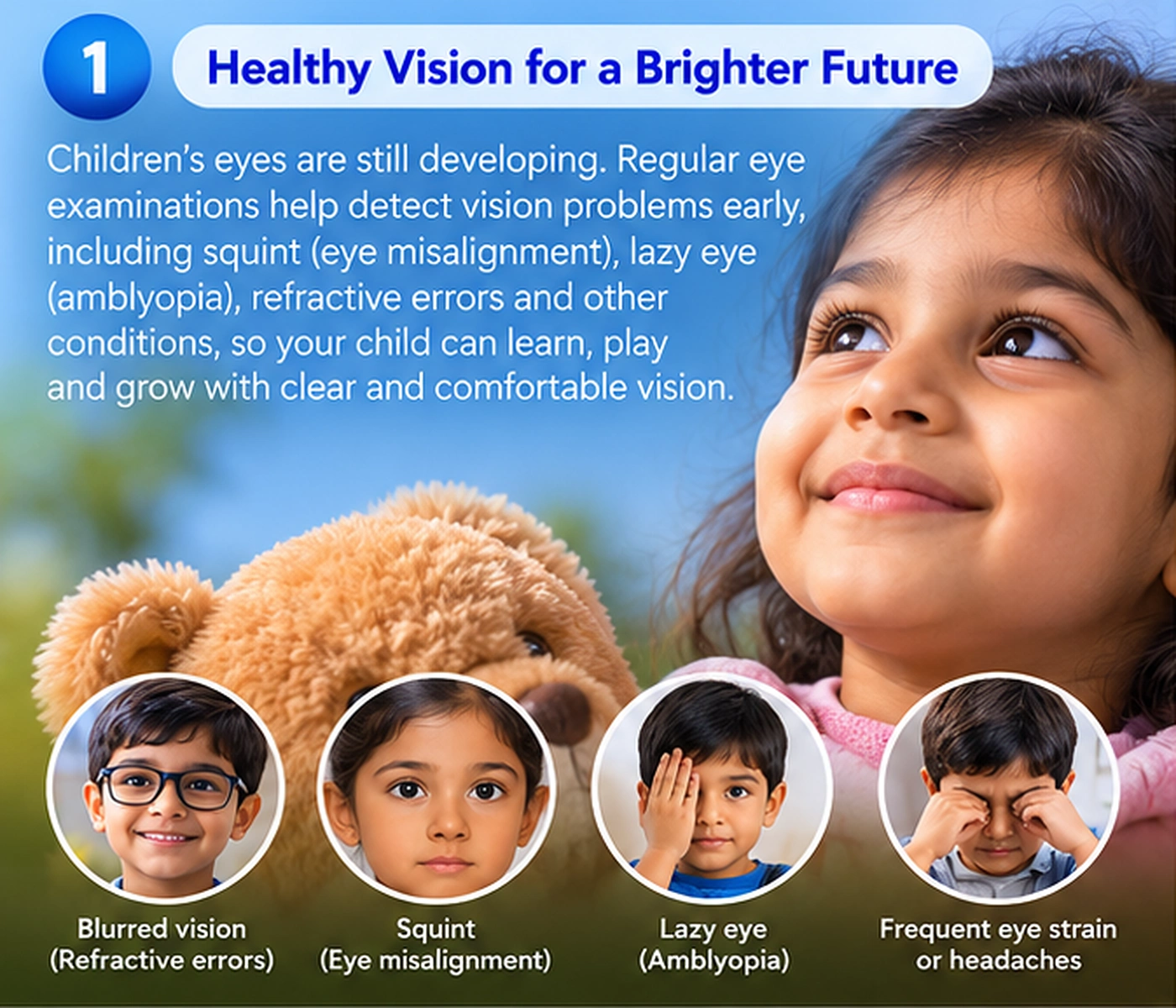
01 / 04Signs that deserve an eye examination
01 / 04
Signs that deserve an eye examination
An eye drifting in or out, trouble seeing near or far, headaches or a suspected lazy eye can prompt an assessment. Some children have no obvious symptoms. A childhood eye examination can check vision, spectacle power and alignment, rather than relying on the illustration to diagnose a condition.
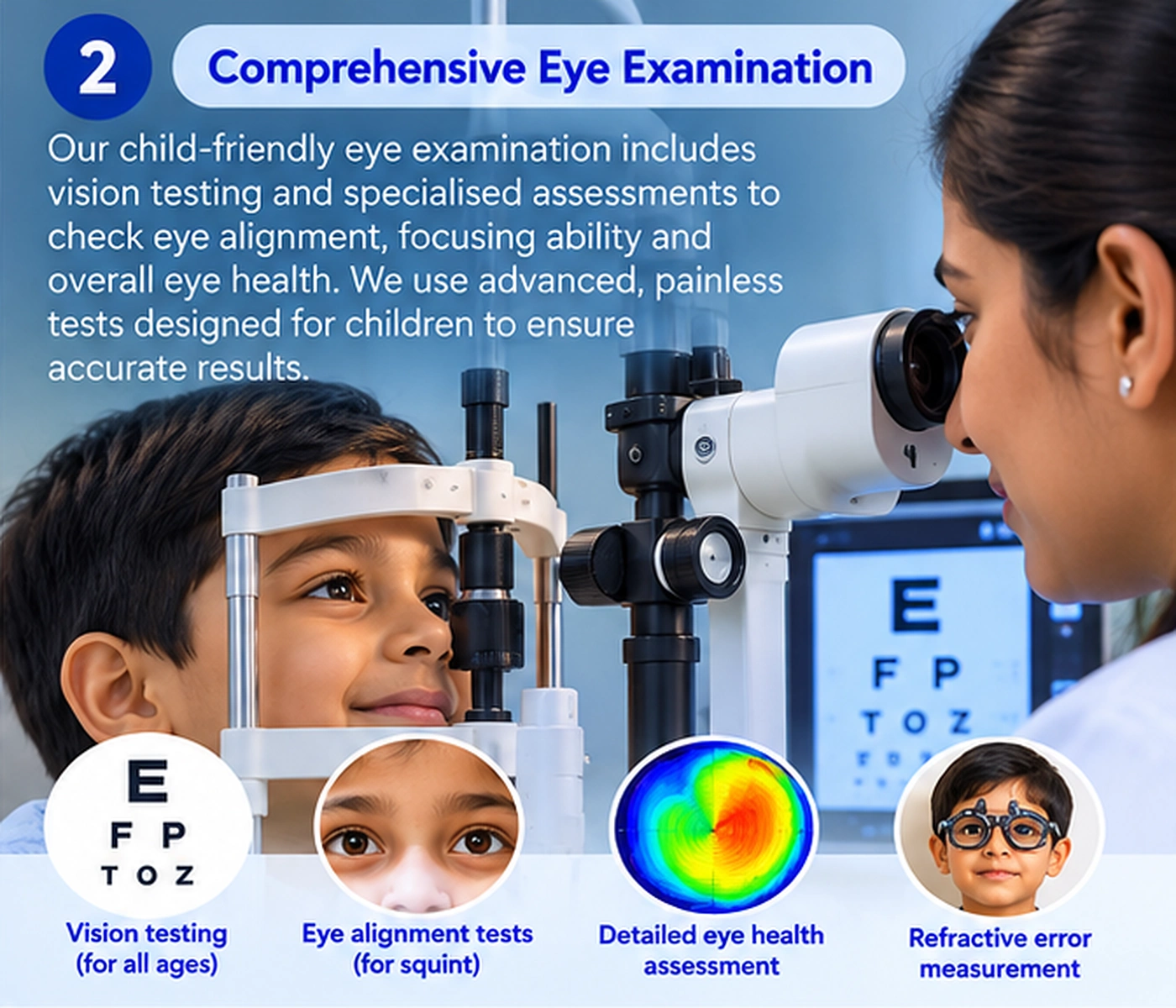
02 / 04
Age-appropriate eye and alignment assessment
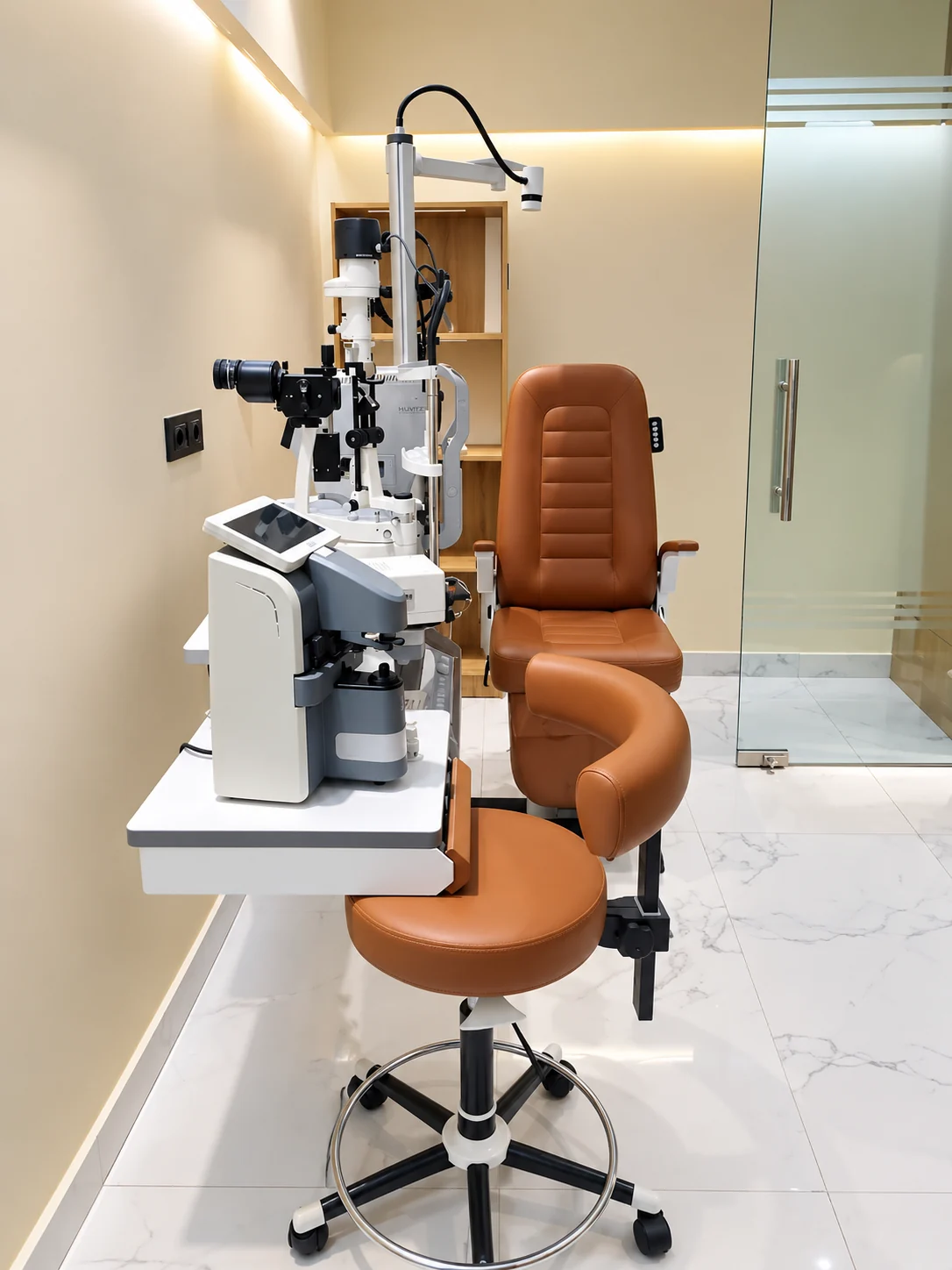
An ophthalmologist may use child-appropriate methods to check eyesight, eye alignment, eye movements, focusing, and ocular health. Drops or specialised measurements are used only when clinically indicated. Depicted equipment and tests are conceptual; on-site availability requires confirmation.
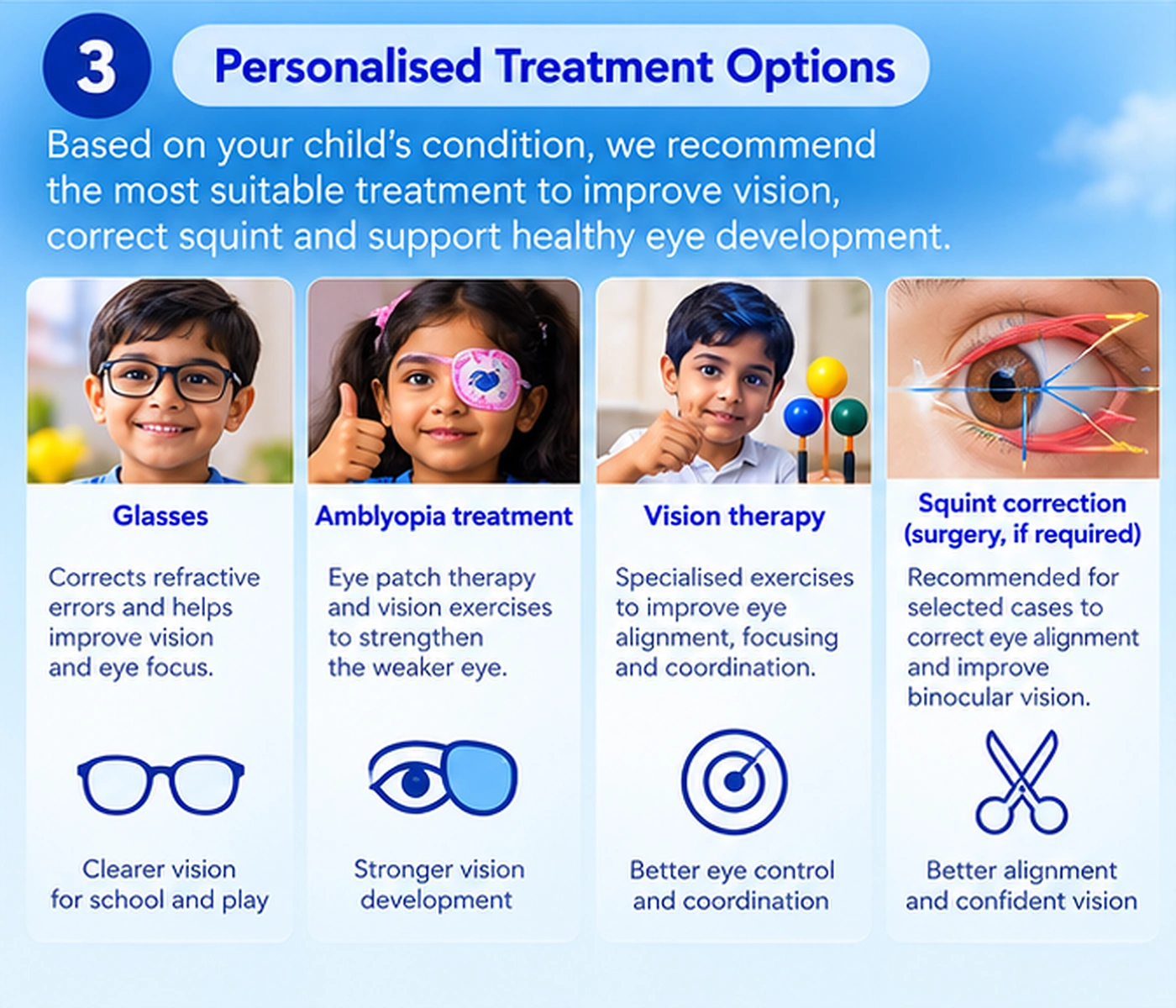
03 / 04
Individualised vision and squint care
Depending on the findings, care may include spectacles, amblyopia patching or atropine treatment, observation, or referral for specialist strabismus evaluation. Exercises are appropriate only for selected binocular vision disorders; they are not a general replacement for evidence-based squint treatment. Surgery may be discussed for some cases, but the clinic has not confirmed operative facilities or provision.
04 / 04
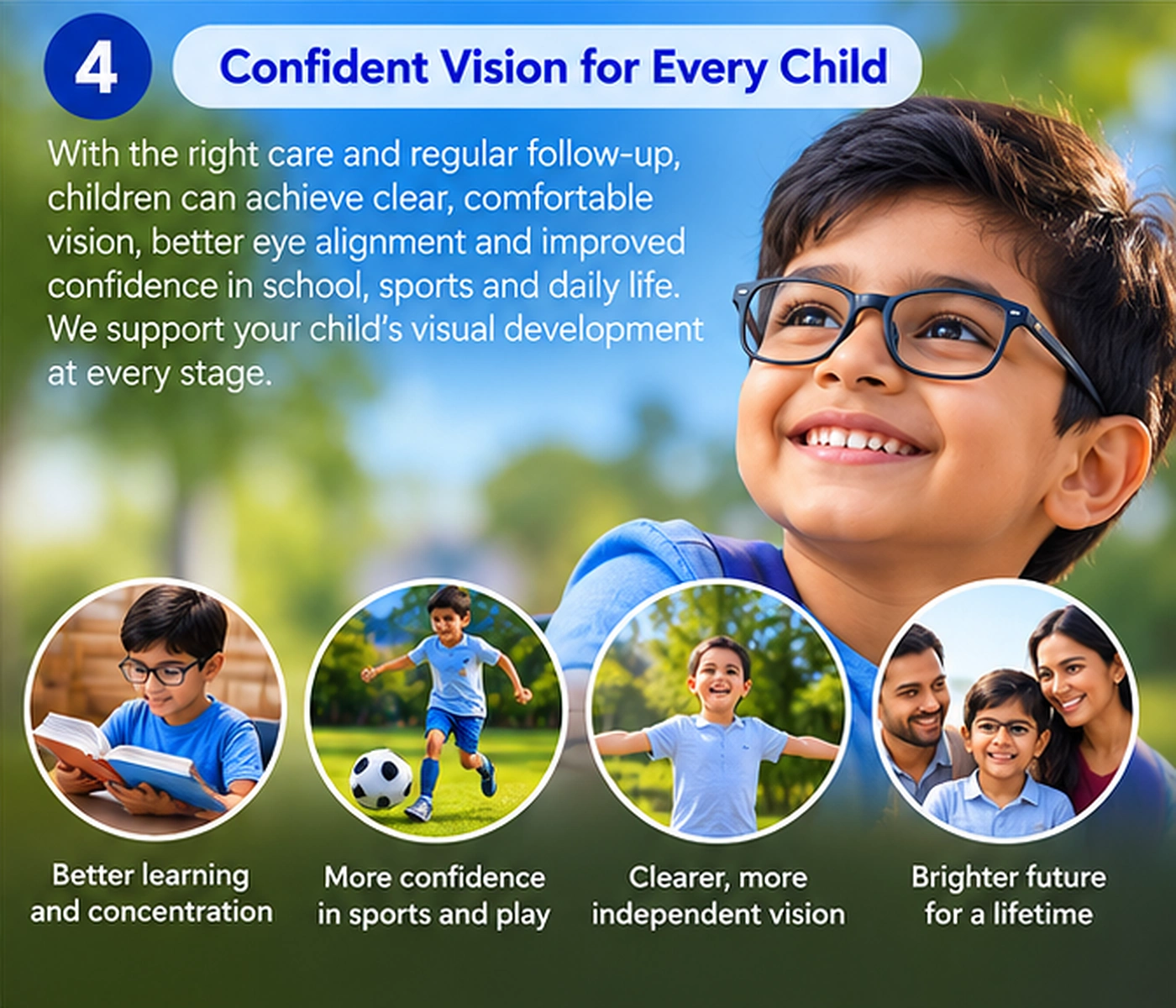
Follow-up and visual development
The clinician will explain the diagnosis, options, possible benefits and risks, and when your child should return for review. Visual development, alignment and response to treatment vary. The illustrated confident child is not evidence of a guaranteed clinical result.
AI-generated educational illustrations, not patient photographs or recordings of actual procedures. Individual treatment and outcomes vary.
01 / Understanding symptoms
When to ask for an assessment
One eye drifting inward or outward
Squinting or headaches during schoolwork
Screening suggesting poor vision
02 / Discussion topics
Tests and treatments to discuss
Your clinician will explain which approaches may be relevant. Procedure equipment, location, accreditation and availability must be independently confirmed.
Paediatric eye examination
Cycloplegic refraction
Amblyopia treatment
Squint evaluation
Visual development monitoring
Childhood cataract assessment
03 / Clinical assessment
What happens at your consultation?
The ophthalmologist may examine alignment, eye movement and vision, and discuss suitable glasses, patching or monitoring.
04 / Informed decision
Suitability, alternatives and safety
Treatment depends on age, visual development and findings; some cases need specialist follow-up.
A consultation is not a laser or operating-room booking. Any surgical arrangements and venue are confirmed separately.
Clinician
Dr. K. Meghana Reddy
MBBS, MS (Ophthalmology), FAIS. Further investigations or specialist involvement depend on your assessment.