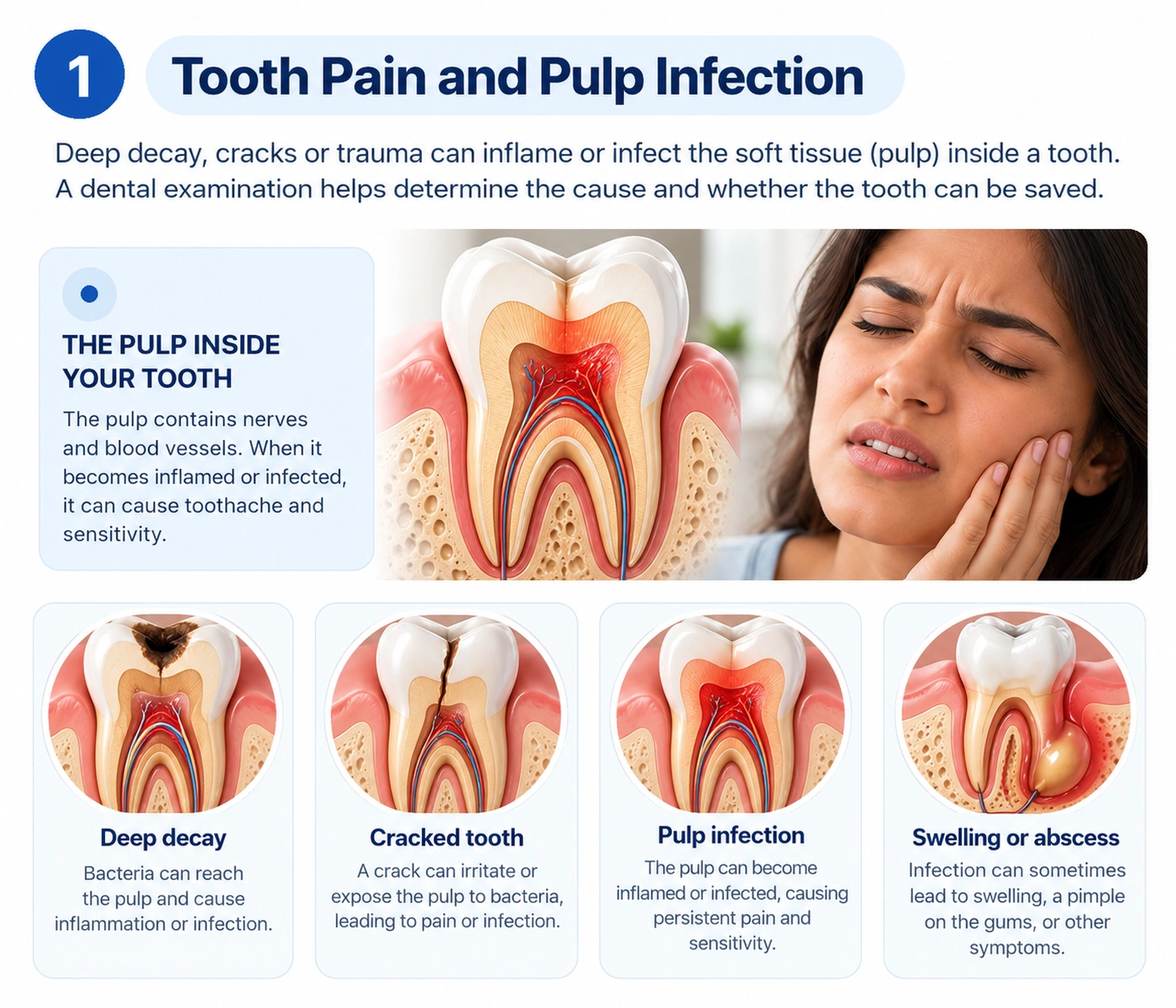
Deep decay, a cracked tooth or an injury can affect the pulp, but tooth pain has many possible causes and cannot be diagnosed from a picture. Your dentist examines the tooth and determines if root canal treatment, another treatment or extraction is the most suitable option.
02 / 04
Examination and treatment planning
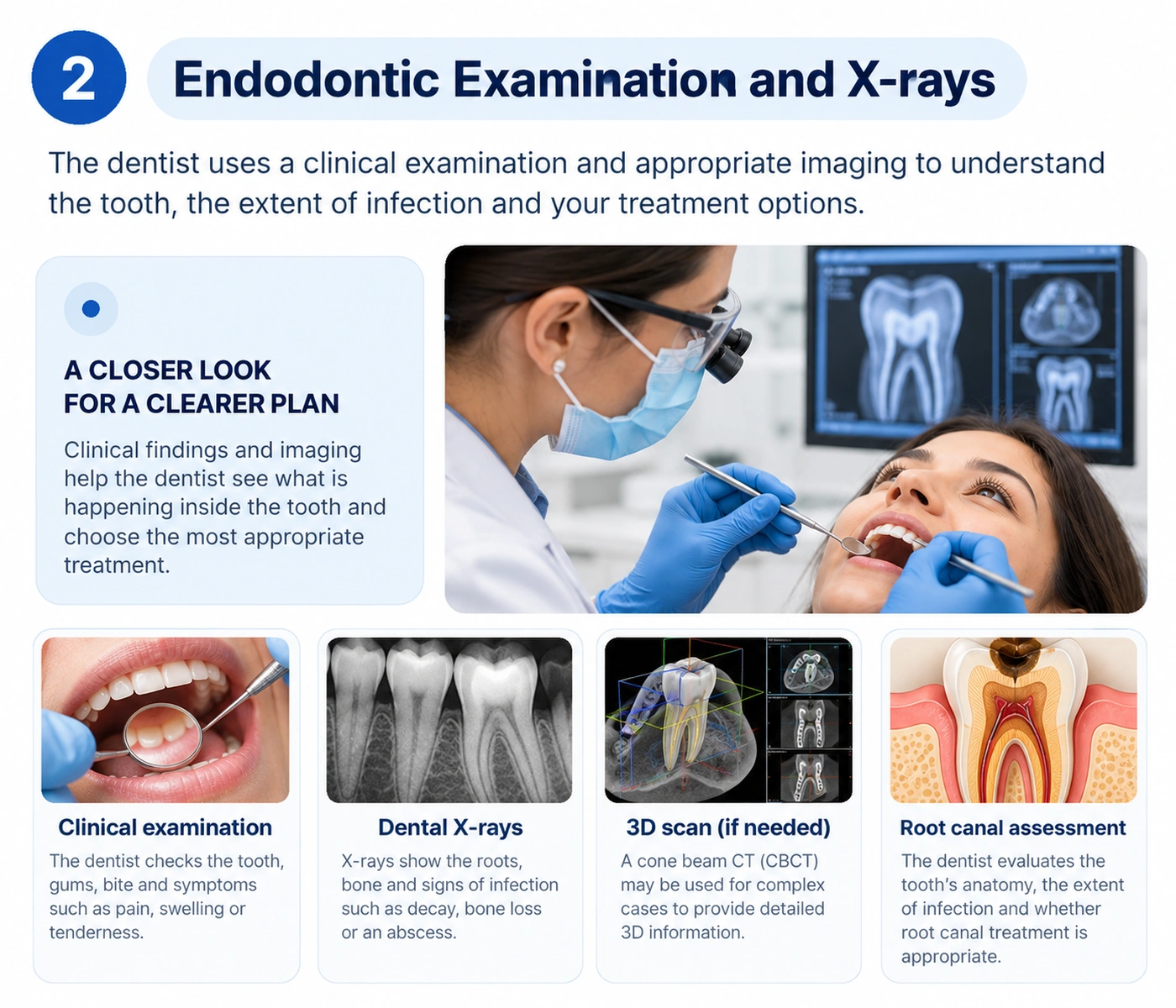
The dentist asks about symptoms, checks the tooth and gums, and may recommend dental X-rays or other tests. Complex root anatomy may sometimes require three-dimensional imaging or specialist assessment. The pictured technology is illustrative, not proof of onsite equipment.
03 / 04
Cleaning, filling and sealing the root canals
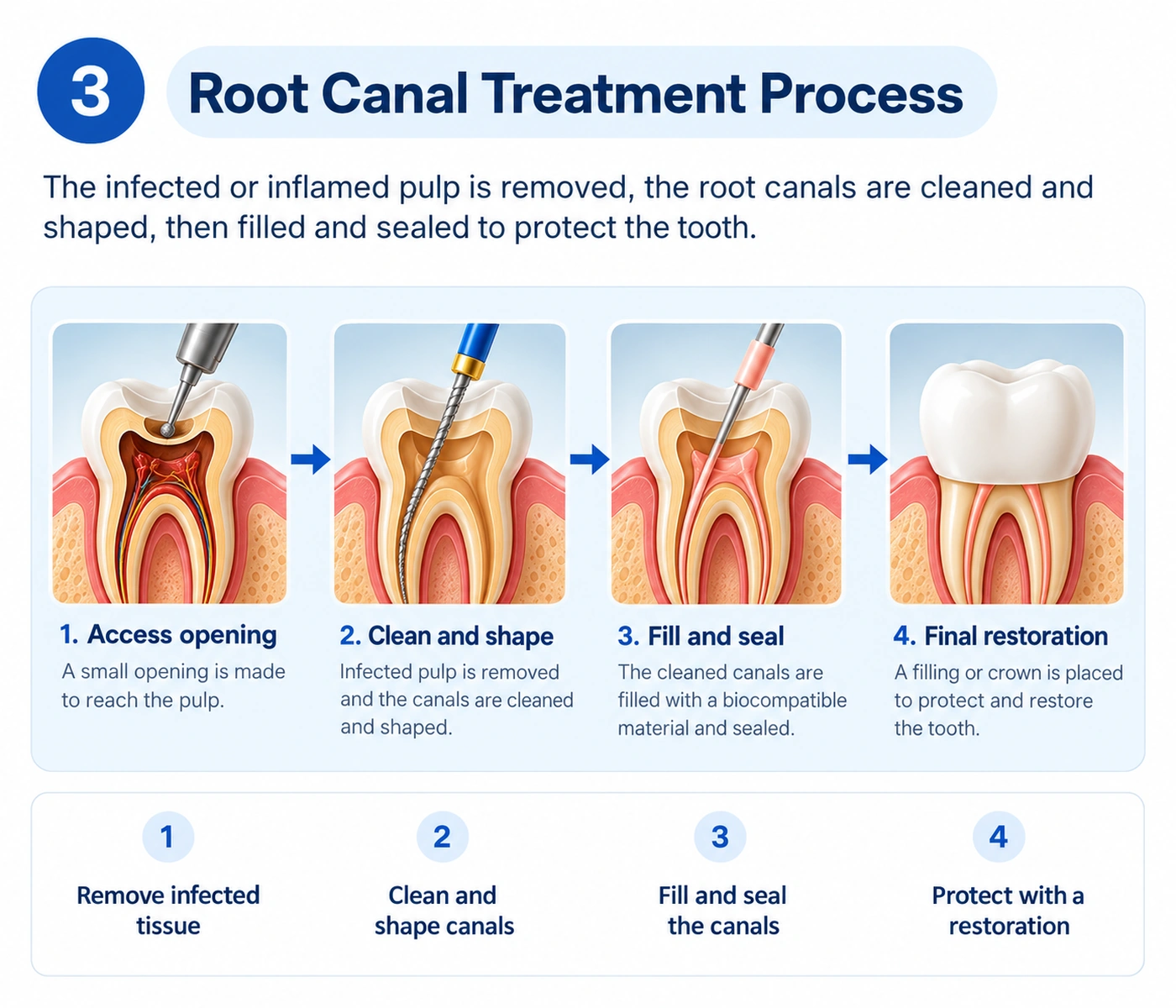
When indicated, root canal treatment usually involves local anaesthesia and isolation, access to the pulp space, removal of inflamed or infected tissue, cleaning and shaping the canals, and sealing them. The four inset diagrams are simplified and do not represent every clinical detail, visit or possible variation.
04 / 04
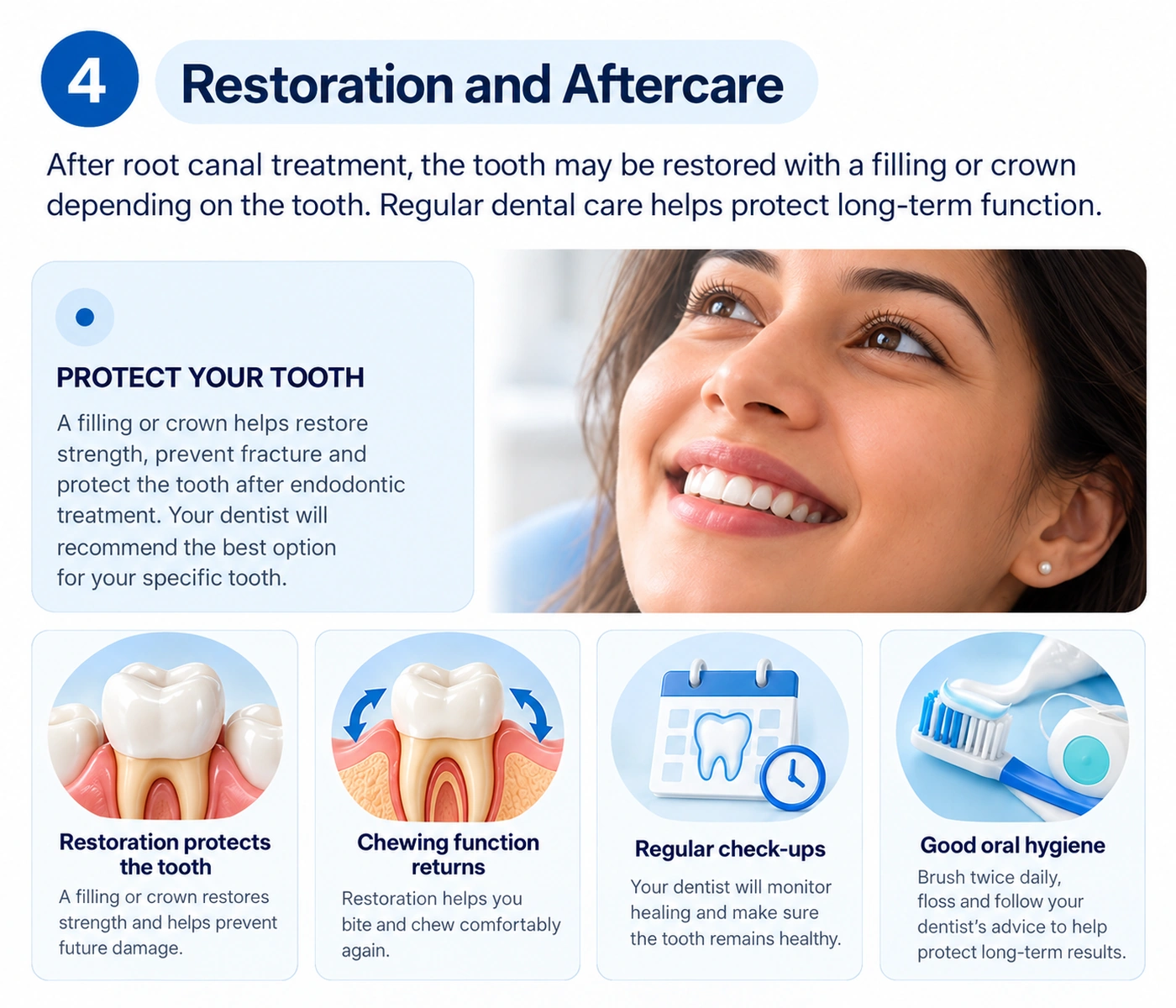
Restoring the tooth and caring for it
After treatment, a suitable filling or crown may be recommended based on the remaining tooth structure and bite. Careful oral hygiene and review help maintain the result, but some teeth need additional treatment, and lasting pain relief or tooth survival cannot be guaranteed. Facial swelling with fever, spreading infection, or difficulty swallowing needs urgent medical assessment.
AI-generated educational illustrations, not patient photographs or recordings of actual procedures. Individual treatment and outcomes vary.
01 / Understanding symptoms
When to ask for an assessment
Persistent toothache
Swelling near a tooth
Pain after previous root canal treatment
02 / Discussion topics
Tests and treatments to discuss
Your clinician will explain which approaches may be relevant. Procedure equipment, location, accreditation and availability must be independently confirmed.
Root canal treatment
Root canal retreatment
Pulpitis and dental abscess evaluation
Pulp capping
Pulpotomy and pulpectomy
Post and core
Apicoectomy suitability
03 / Clinical assessment
What happens at your consultation?
The dentist examines the tooth and reviews clinically indicated radiographs and tests before explaining treatment and alternatives.
04 / Informed decision
Suitability, alternatives and safety
Fever, spreading facial swelling or difficulty swallowing requires prompt medical assessment.
Clinician
Dr. P. Rama Devi
BDS, MBA (HHCM). Further investigations or specialist involvement depend on your assessment.