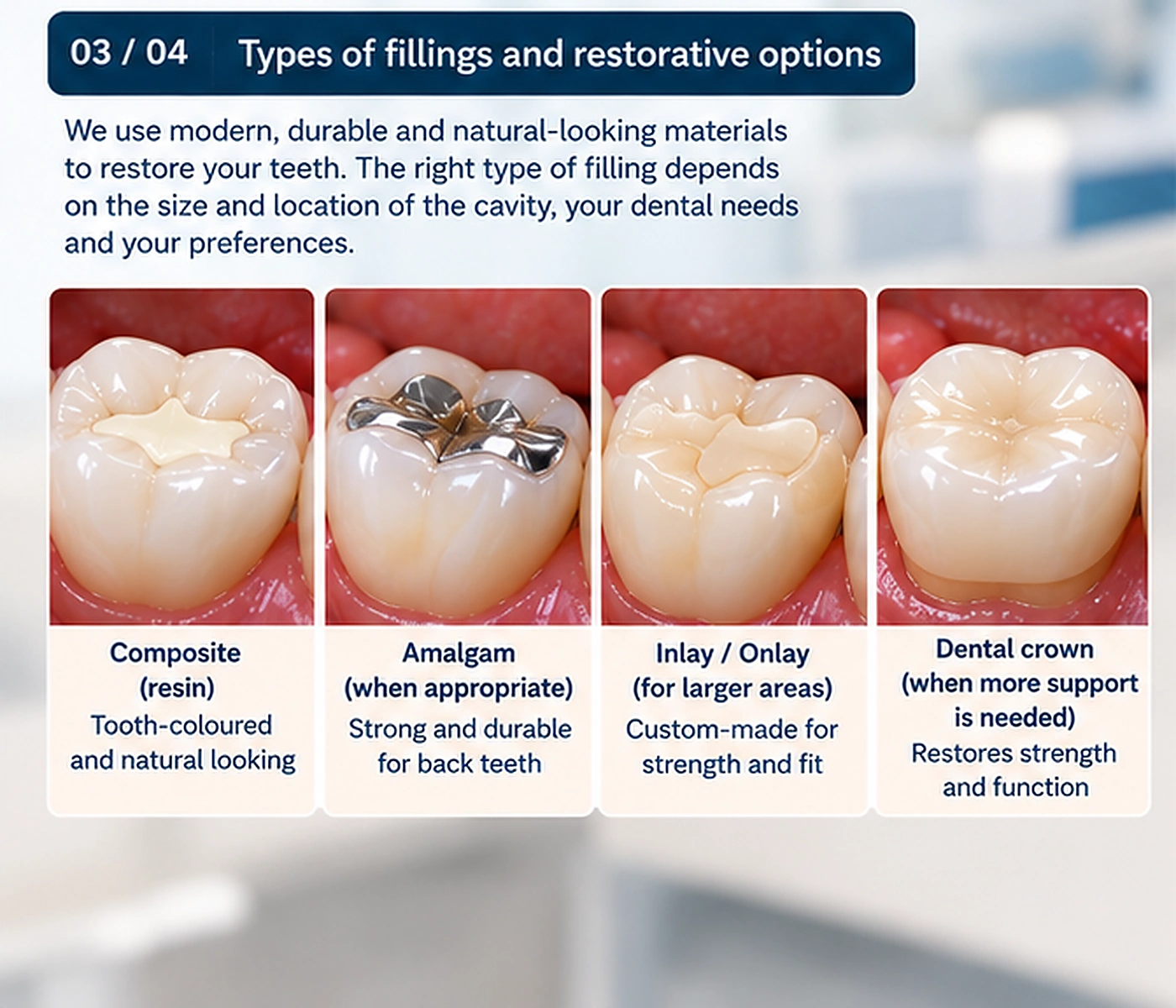
Preview artwork under clinical review: The third illustration compares restorative options including inlays and onlays, which are not listed services at this clinic. The illustrated materials, procedures and outcomes are educational examples, not verified onsite availability or promises of treatment success.
Dental care / Visual education
Understanding fillings and restorative dentistry
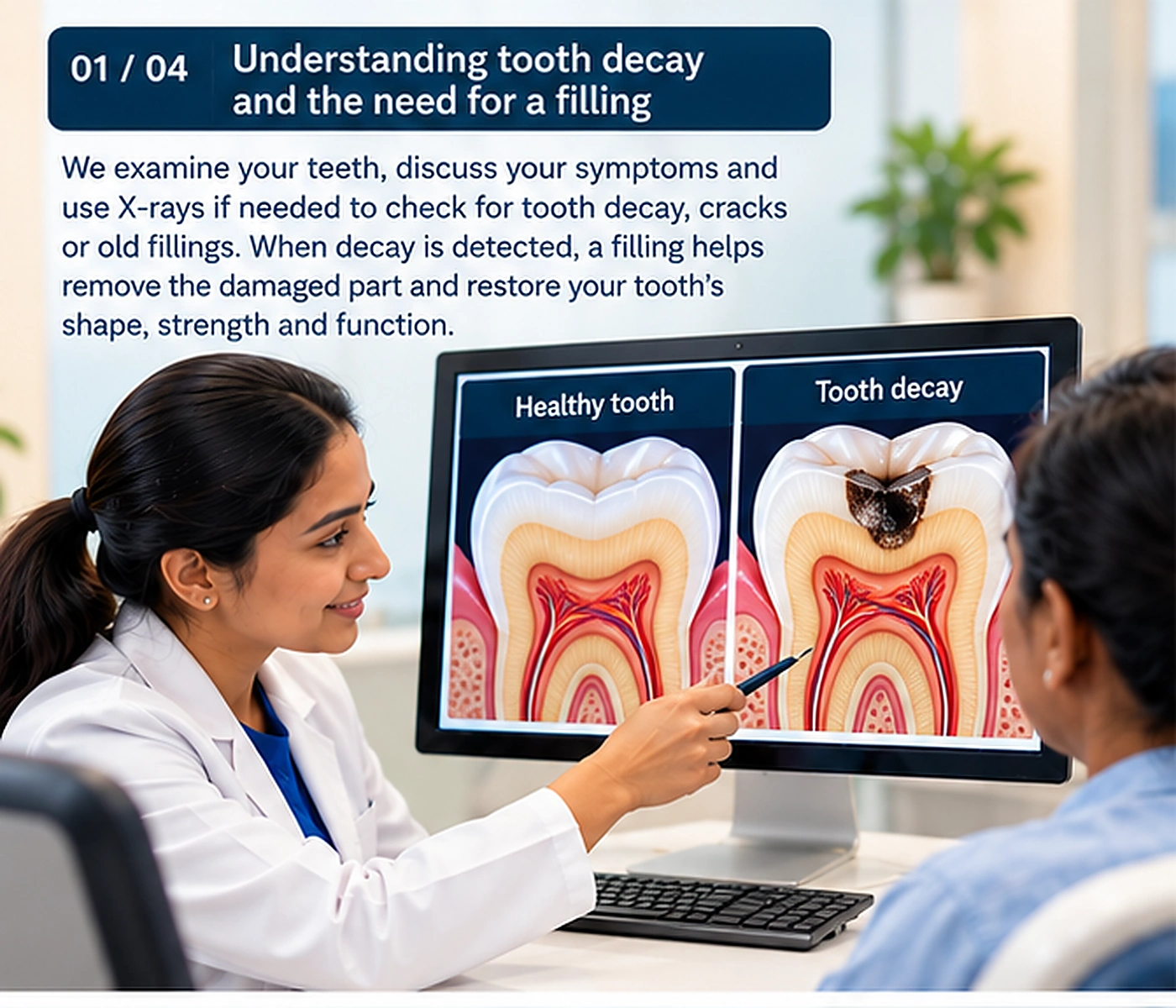
01 / 04Understanding tooth damage and assessment
01 / 04
Understanding tooth damage and assessment
The dentist asks about symptoms and checks for decay, a damaged filling, tooth wear or cracks. Dental X-rays may be used if indicated. A dark area does not by itself prove a cavity requiring drilling; the treatment choice depends on the clinical examination.
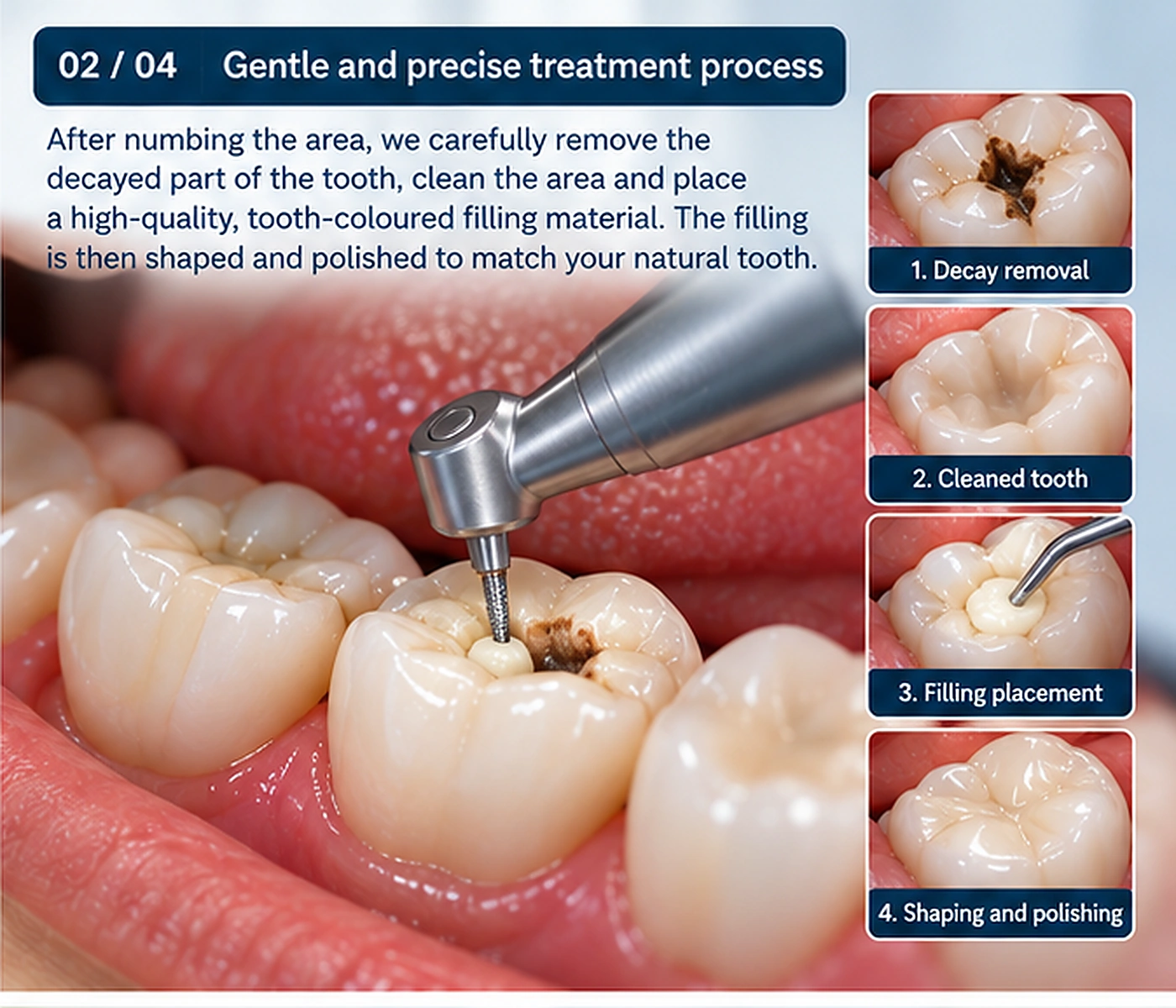
02 / 04
Preparing a cavity and placing a filling
When a direct filling is appropriate, the clinician may numb and isolate the tooth, remove damaged tissue while preserving healthy structure, and place and shape a restoration. The illustrations combine several separate steps; they are not actual treatment photographs.
03 / 04
Comparing illustrative restoration options
The supplied third frame compares composite, amalgam, inlay/onlay and crowns. These are general educational examples, NOT a list of treatments offered by this clinic. Inlays and onlays were explicitly excluded from the clinic's approved service list; materials and restorative options require individual clinical assessment.
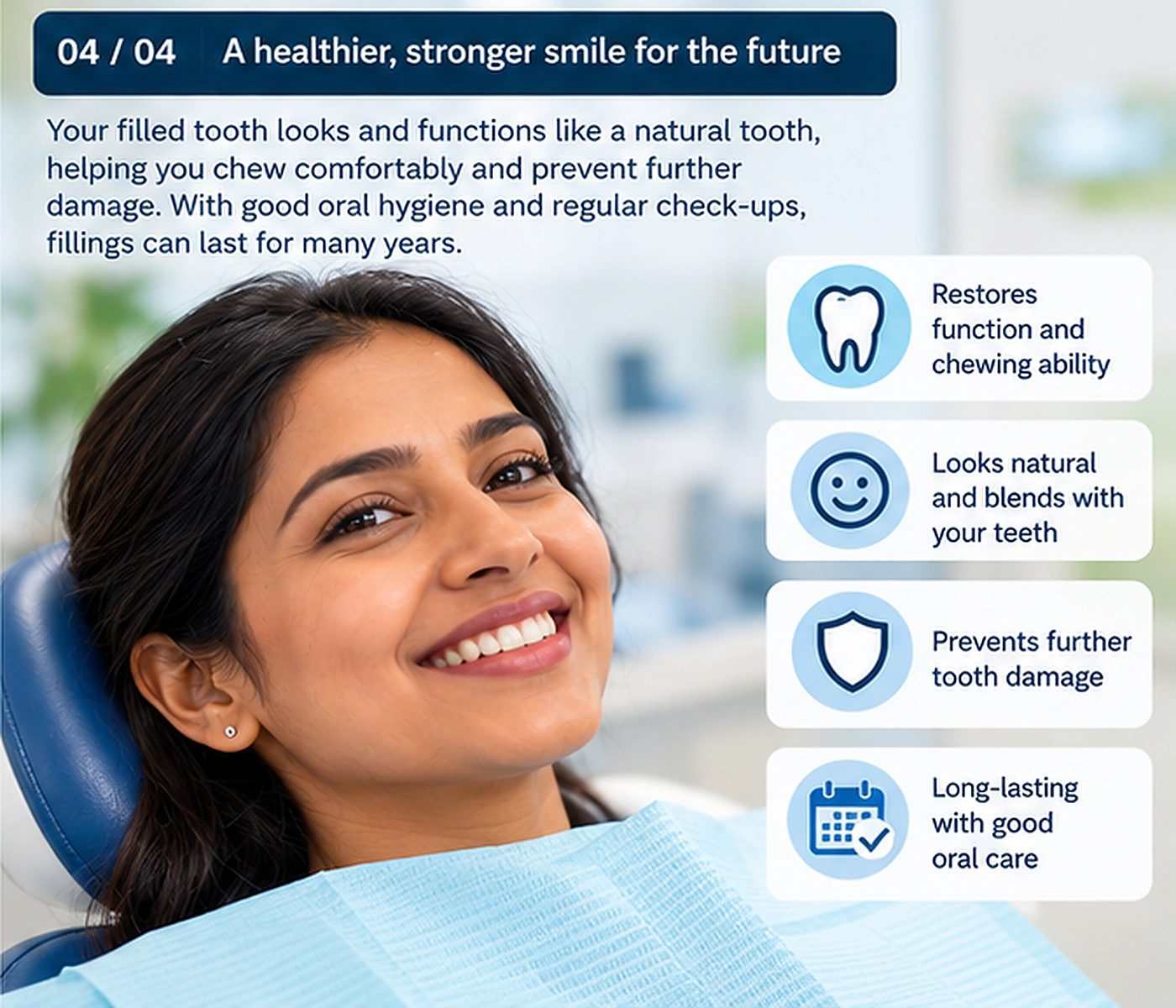
04 / 04
Restored tooth, bite check and aftercare
A suitable filling may restore tooth form and chewing function, but appearance and durability vary. The dentist checks the restoration and bite, explains cleaning and dietary care, and recommends follow-up as needed. The smile and stated benefits in the artwork are illustrative, not guaranteed outcomes.
AI-generated educational illustrations, not patient photographs or recordings of actual procedures. Individual treatment and outcomes vary.
01 / Understanding symptoms
When to ask for an assessment
Visible decay or damaged filling
Chipped tooth or worn edge
Sensitivity to biting or sweet foods
02 / Discussion topics
Tests and treatments to discuss
Your clinician will explain which approaches may be relevant. Procedure equipment, location, accreditation and availability must be independently confirmed.
Tooth-coloured fillings
Glass-ionomer restorations
Composite bonding
Fractured tooth repair
Tooth wear and erosion care
Full-mouth restorative rehabilitation
03 / Clinical assessment
What happens at your consultation?
The dentist evaluates decay, tooth structure and bite before discussing filling materials, bonding or a more extensive restoration.
04 / Informed decision
Suitability, alternatives and safety
Deep decay may need pulp therapy or a crown rather than a direct restoration; treatment varies by diagnosis.
Clinician
Dr. P. Rama Devi
BDS, MBA (HHCM). Further investigations or specialist involvement depend on your assessment.