Educational illustrations under clinical review: Crown materials, denture designs and implant-supported restorations shown are possible options, not confirmed services or equipment at this premises. Implant surgery requires separate clinical suitability and treatment-location confirmation.
Dental care / Visual education
Understanding restorative and tooth-replacement options
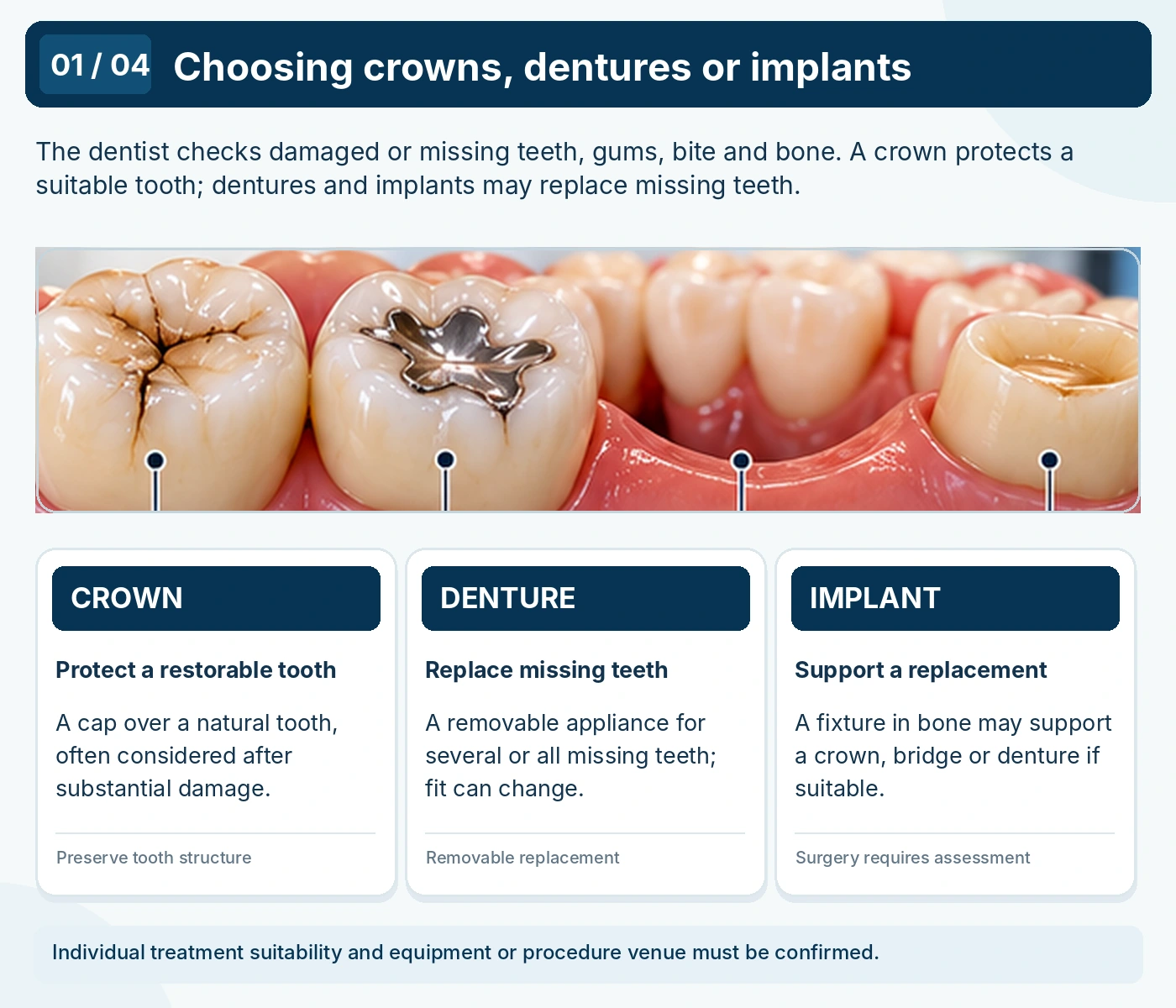
01 / 04When a tooth needs protection or replacement
01 / 04
When a tooth needs protection or replacement
A cracked or significantly damaged tooth may need protection; missing teeth may be replaced using a bridge, removable denture or implant-supported restoration. A dentist reviews the remaining tooth structure, gum and bone health, bite and medical history. A crown covers a restorable tooth; it does not replace an absent tooth without support.
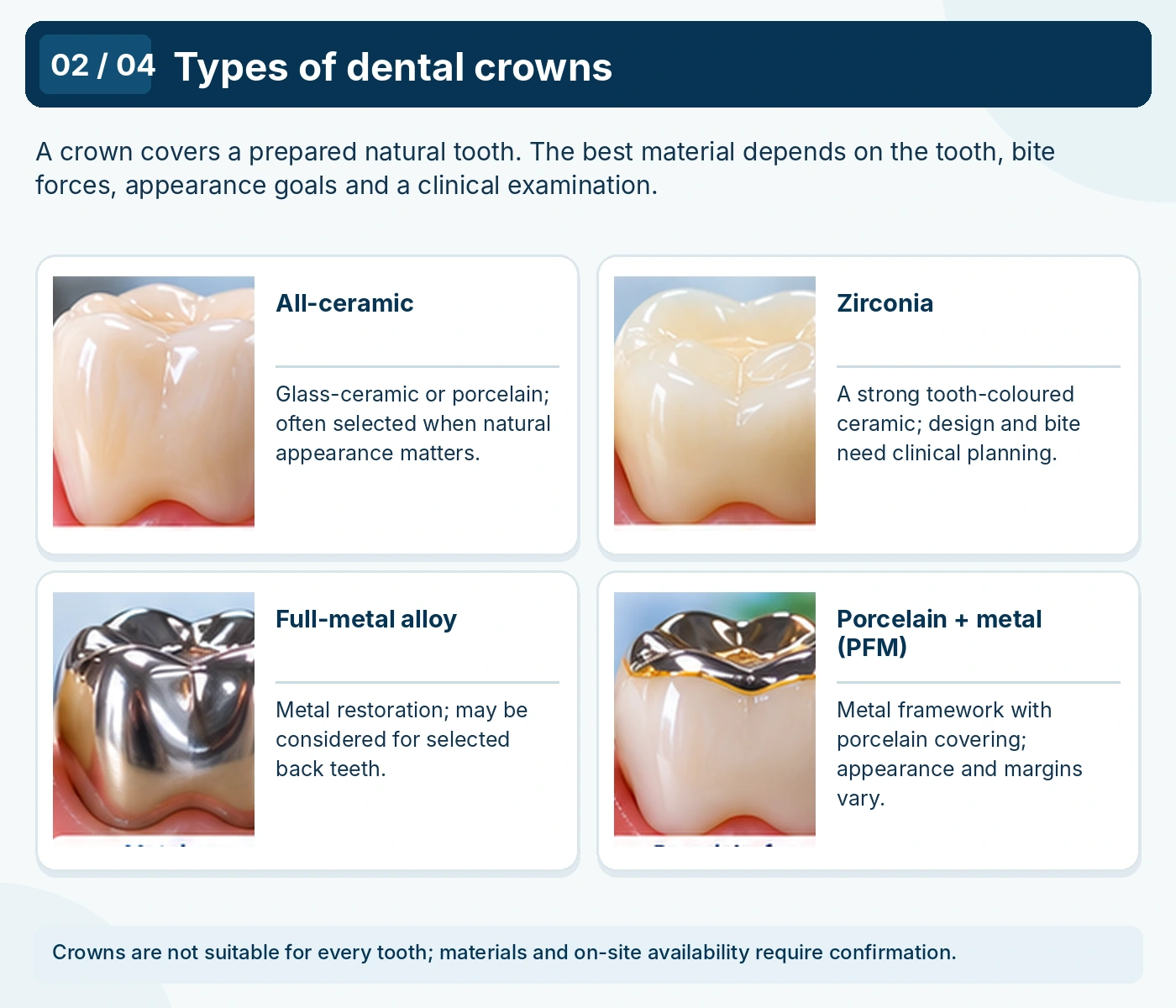
02 / 04
Crown materials and restoration choices
Crowns may be made from all-ceramic, zirconia, porcelain-fused-to-metal (PFM) or metal alloys. Each material has trade-offs in appearance, tooth preparation, strength and suitability. The illustrations show typical options—not a promise that every material is provided or stocked at the clinic.
03 / 04
Removable and implant-retained denture options
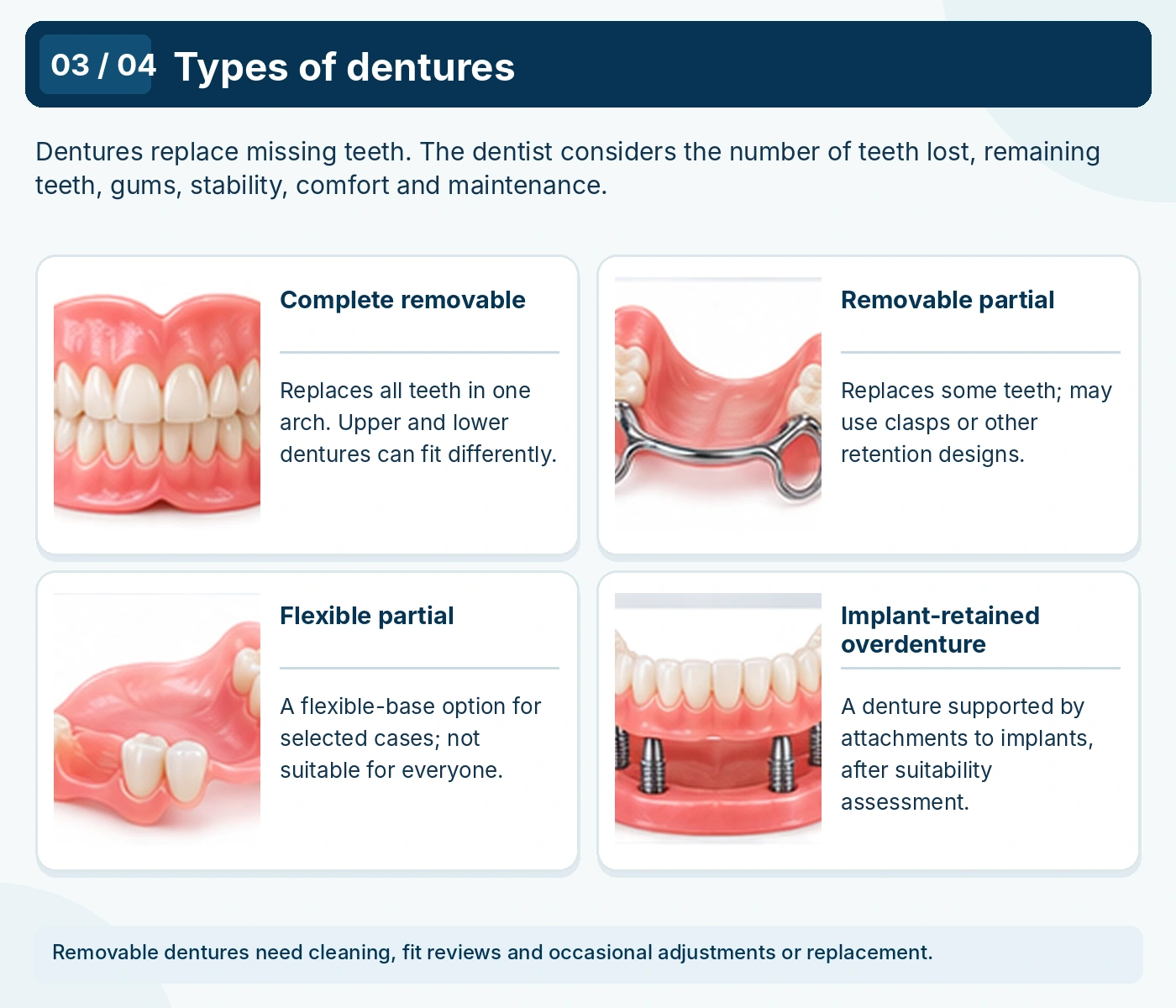
Complete dentures replace all teeth in an arch; partial dentures replace selected missing teeth. Flexible partial dentures and implant-retained overdentures may suit some patients. Comfort, retention, cleaning and maintenance needs differ. Implant-retained dentures require an independently assessed implant procedure and treatment setting.
04 / 04
Implant-supported restorations and suitability
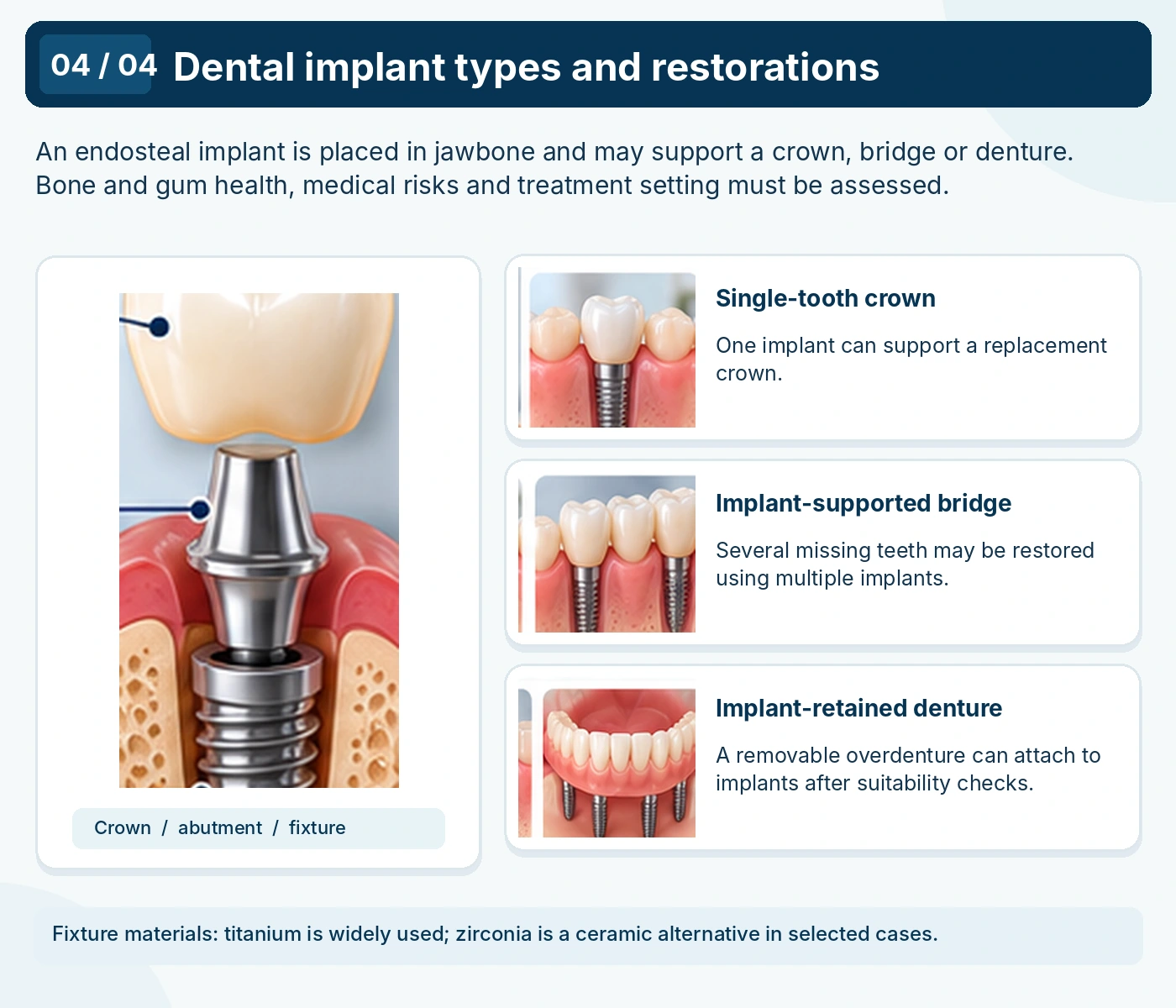
Dental implants are usually placed into bone and may support a single crown, a bridge or a removable or fixed full-arch prosthesis. Titanium and zirconia describe implant materials; the single-tooth, multiple-tooth and full-arch examples are restoration configurations, not different surgery types. A clinical examination and imaging determine suitability, risks, alternatives, venue and maintenance.
AI-generated educational illustrations, not patient photographs or recordings of actual procedures. Individual treatment and outcomes vary.
01 / Understanding symptoms
When to ask for an assessment
One or more missing teeth
A cracked tooth requiring protection
A loose or uncomfortable denture
02 / Discussion topics
Tests and treatments to discuss
Your clinician will explain which approaches may be relevant. Procedure equipment, location, accreditation and availability must be independently confirmed.
Crowns
Fixed dental bridges
Partial dentures
Complete dentures
Immediate dentures
Implant crowns
Implant bridges
Implant-supported dentures
Denture adjustment and repairs
03 / Clinical assessment
What happens at your consultation?
The dentist examines neighbouring teeth, gums, bone and bite before comparing crowns, bridges, dentures and implant-supported options.
04 / Informed decision
Suitability, alternatives and safety
Implant surgery requires separate suitability and treatment-setting decisions; long-term hygiene and maintenance remain important.
Clinician
Dr. P. Rama Devi
BDS, MBA (HHCM). Further investigations or specialist involvement depend on your assessment.